

Animal genetics
The breeder farm through which Grupo Merino integrates the first link of the poultry chain: our own day-old chicks, traceable and in constant supply for Venezuelan producers.
Let’s talkThe project
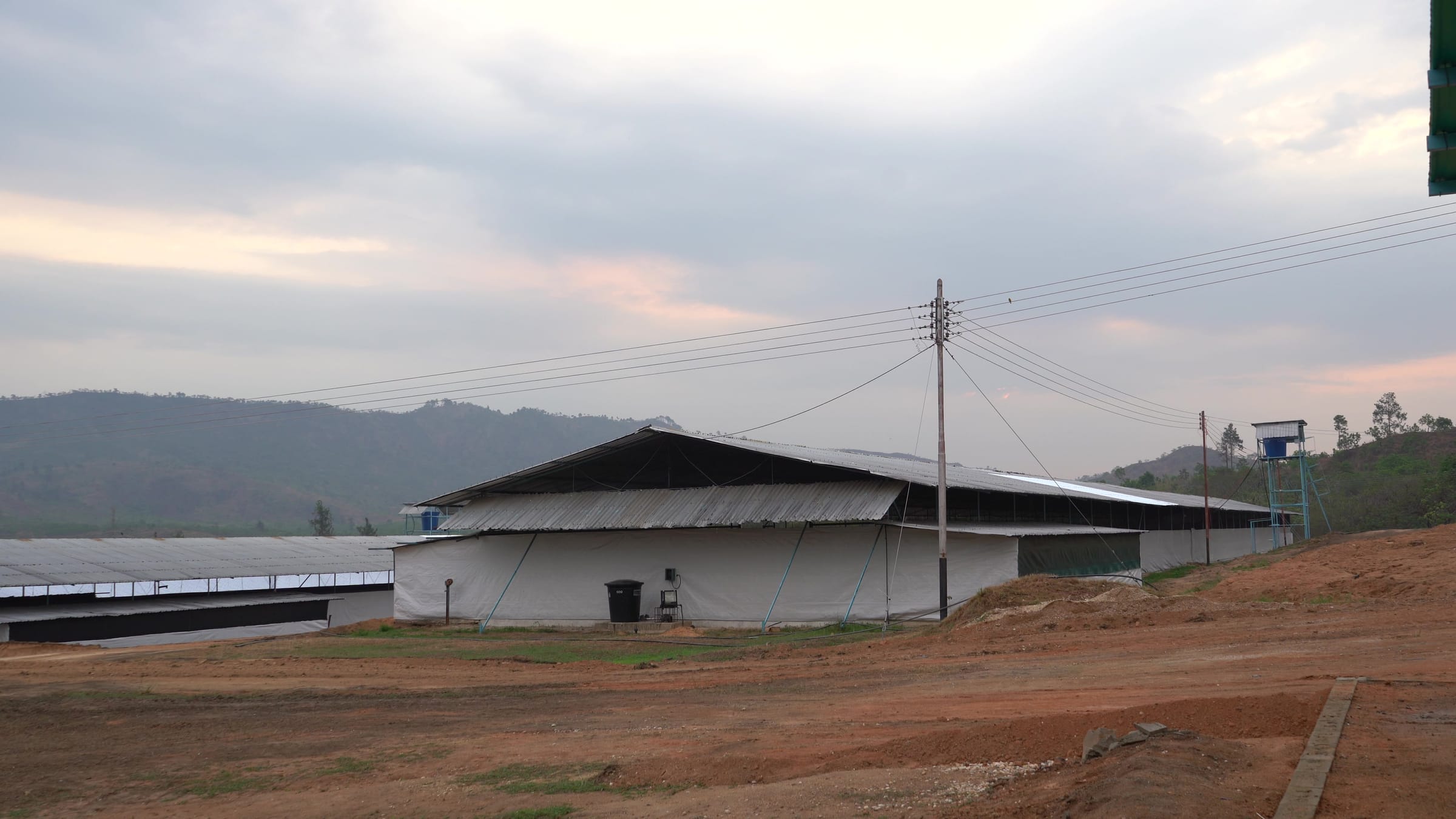
In the state of Cojedes, Grupo Merino is building a breeder farm with capacity for 30,000 birds. The aim is specific: to produce the Ross 308 day-old chick that Venezuelan producers currently have to go out and find, and to produce it to a uniform standard and in constant supply.
Why genetics
It is the first stage of production and the one that most determines the final result. With our own farm, supply stops depending on third parties and becomes group infrastructure: constant, sustainable and traceable.
Installed capacity
- Total project investment
- Grupo Merino’s own capital.
- Breeder hens already in production
- The farm’s full flock.
- Broiler chicks a week
- Production capacity at full operation.
- First production batch
- September 2026.
The genetics
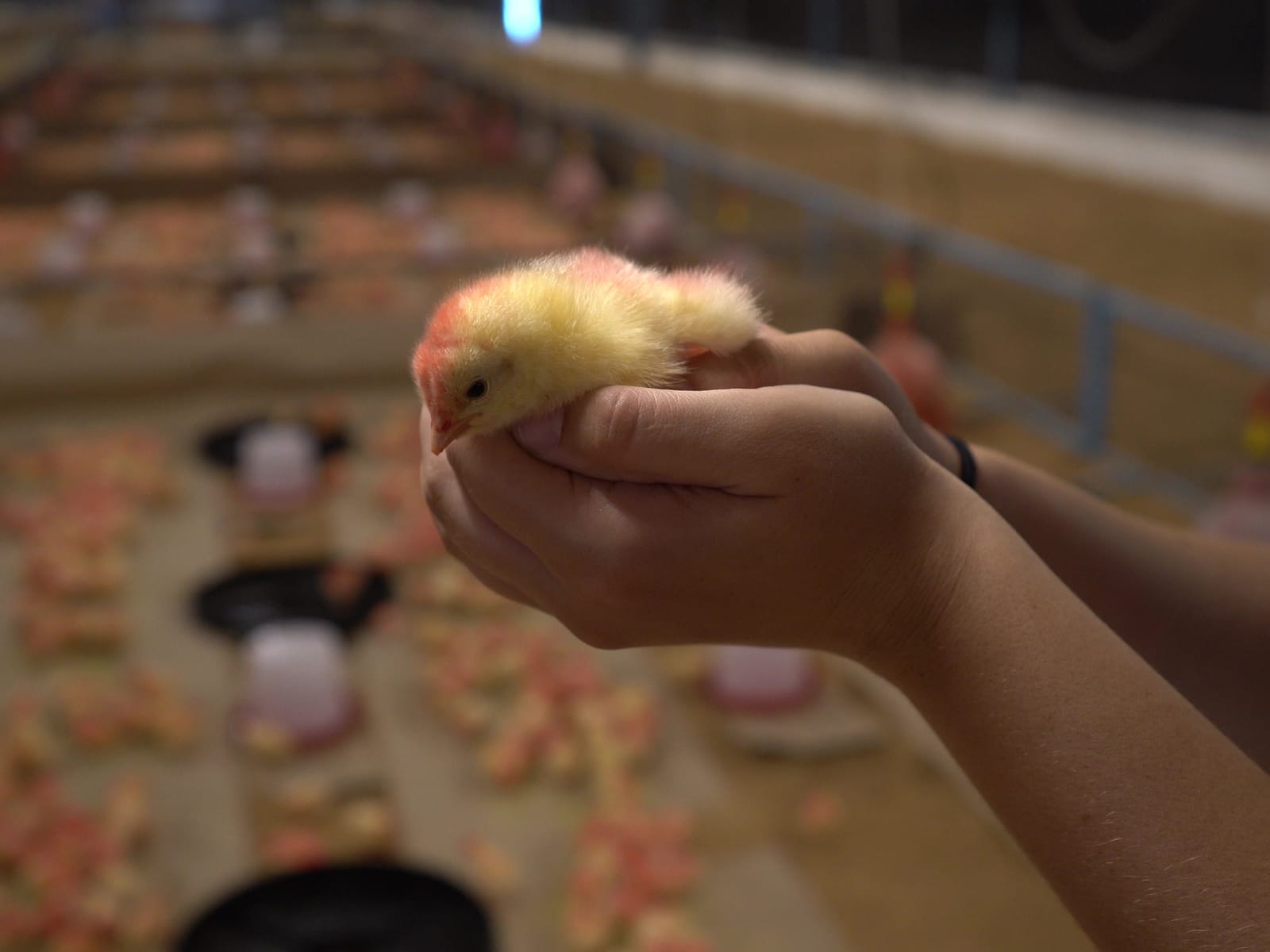
It is the most widely used broiler line in the world, recognised for its performance and feed efficiency. For the producer that translates into two measurable things: fewer kilos of feed per kilo of meat, and flocks that reach target weight evenly.
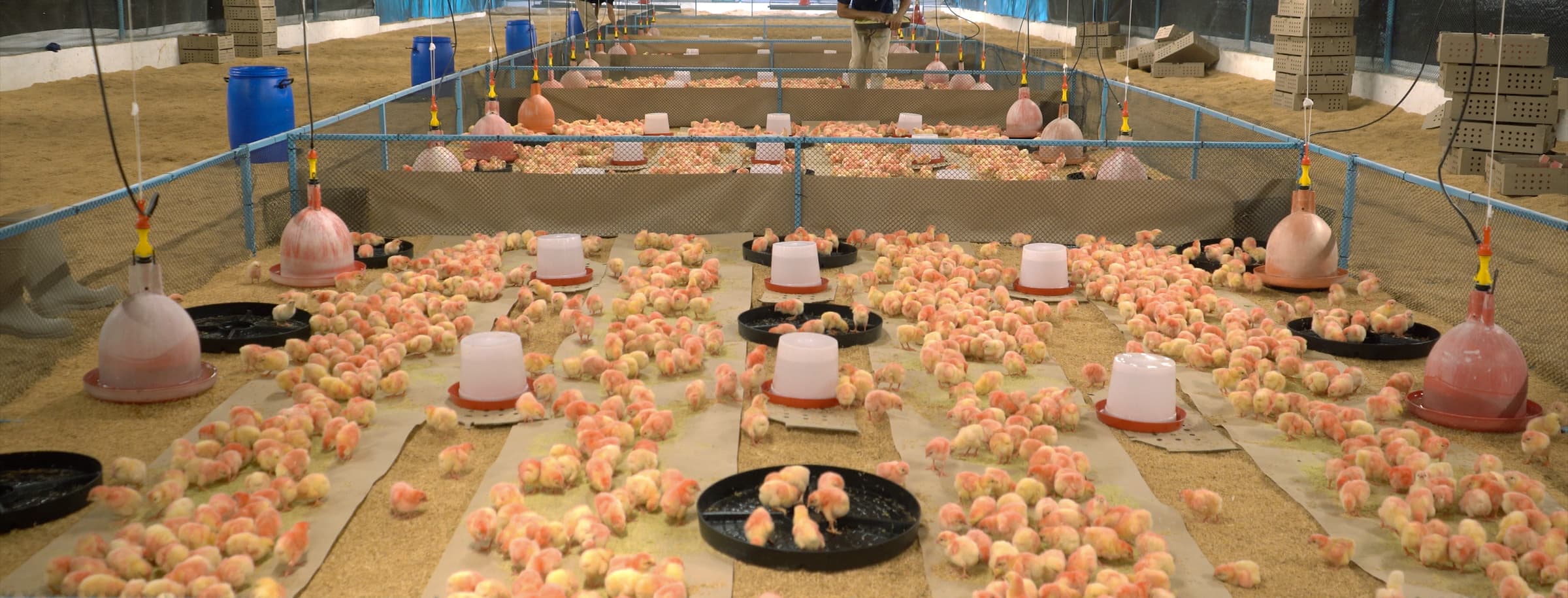
The pullets on this page come from the flock’s rearing stage, the breeders to be: the first batch of chicks comes in September 2026.
The farm
Controlled-environment houses, complete brooding equipment and biosecurity from the gate. Every infrastructure decision is made for the same reason: the performance of the flock behind every chick.
Brooding houses
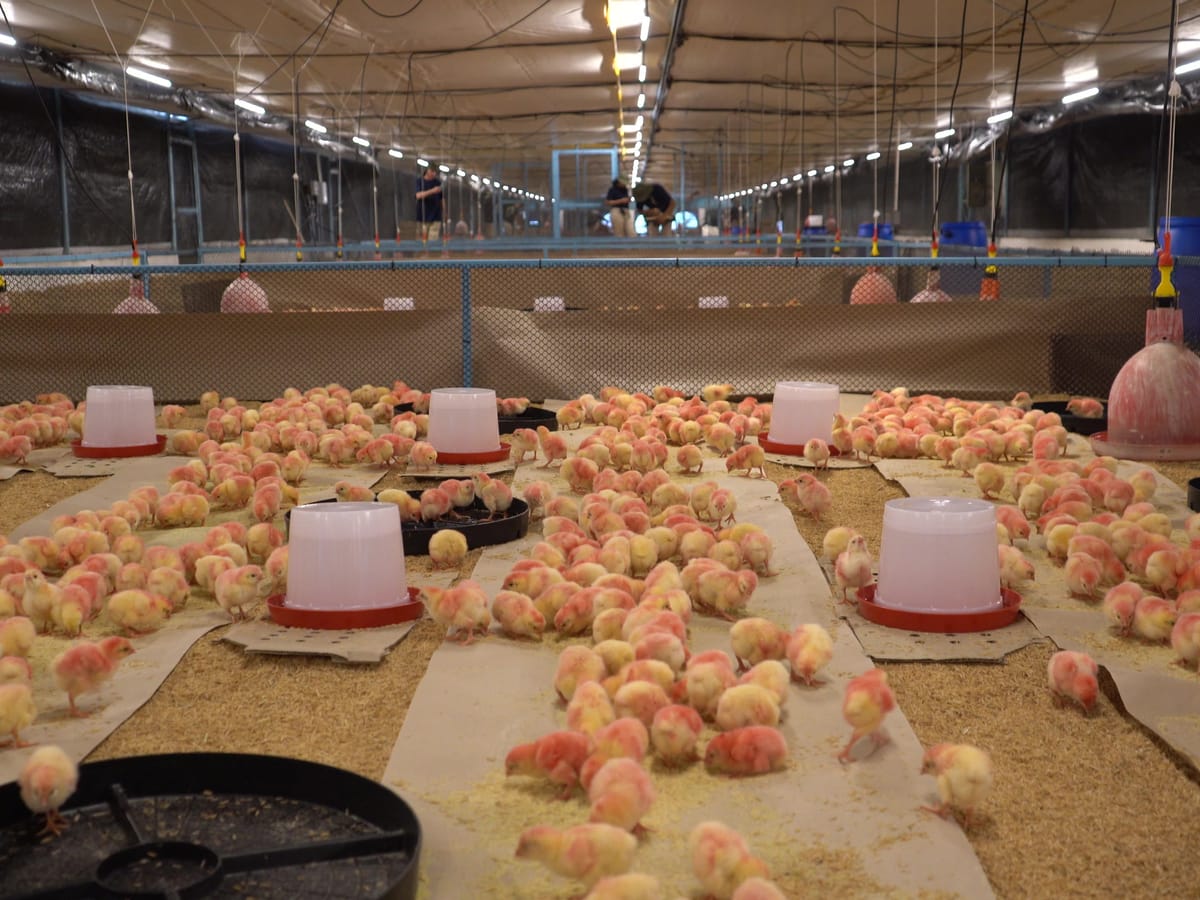
Floor houses on rice-husk bedding, divided into pens so the flock can be handled in batches and the pullets stay close to heat, water and feed.
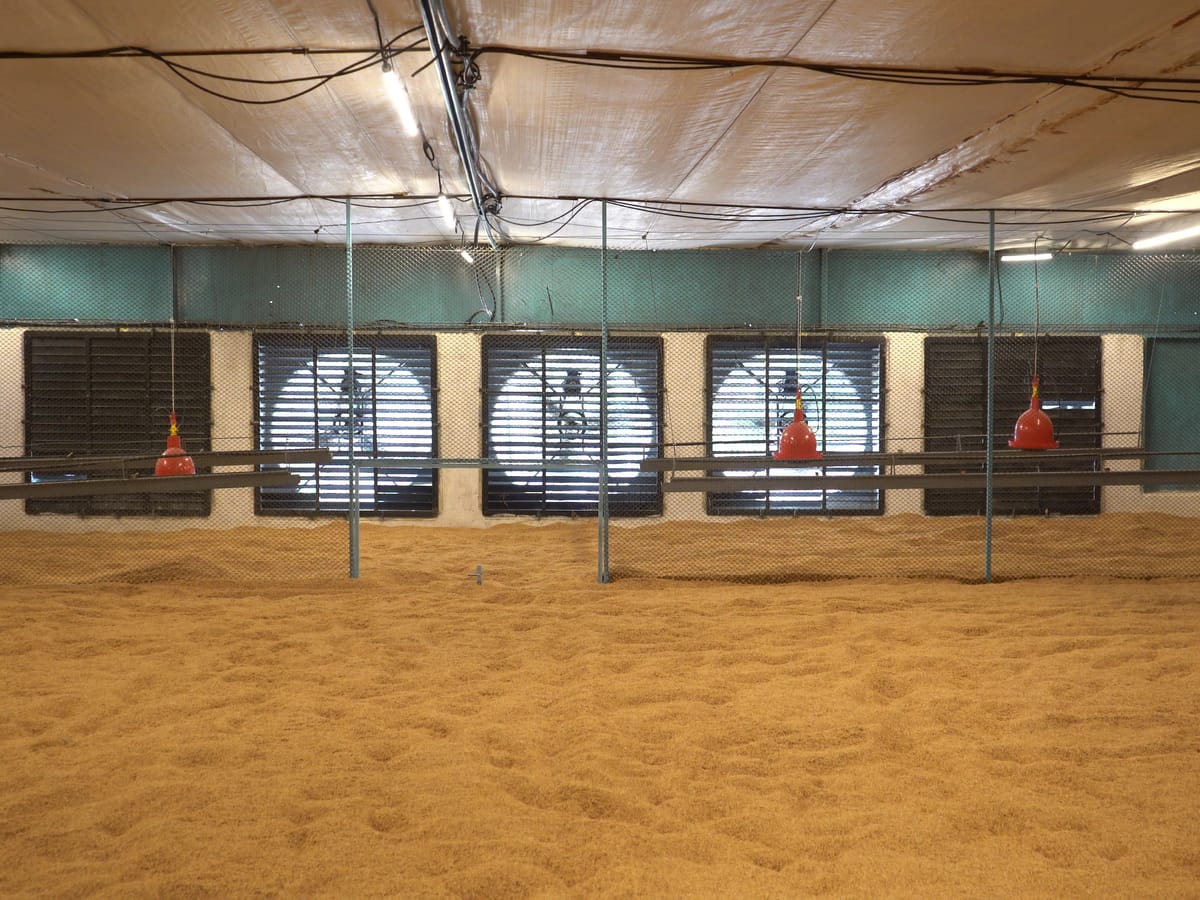
Controlled environment
Extractors, curtains and brooders to hold the temperature and ventilation each stage calls for. In poultry farming the environment does not accompany the result: it produces it.
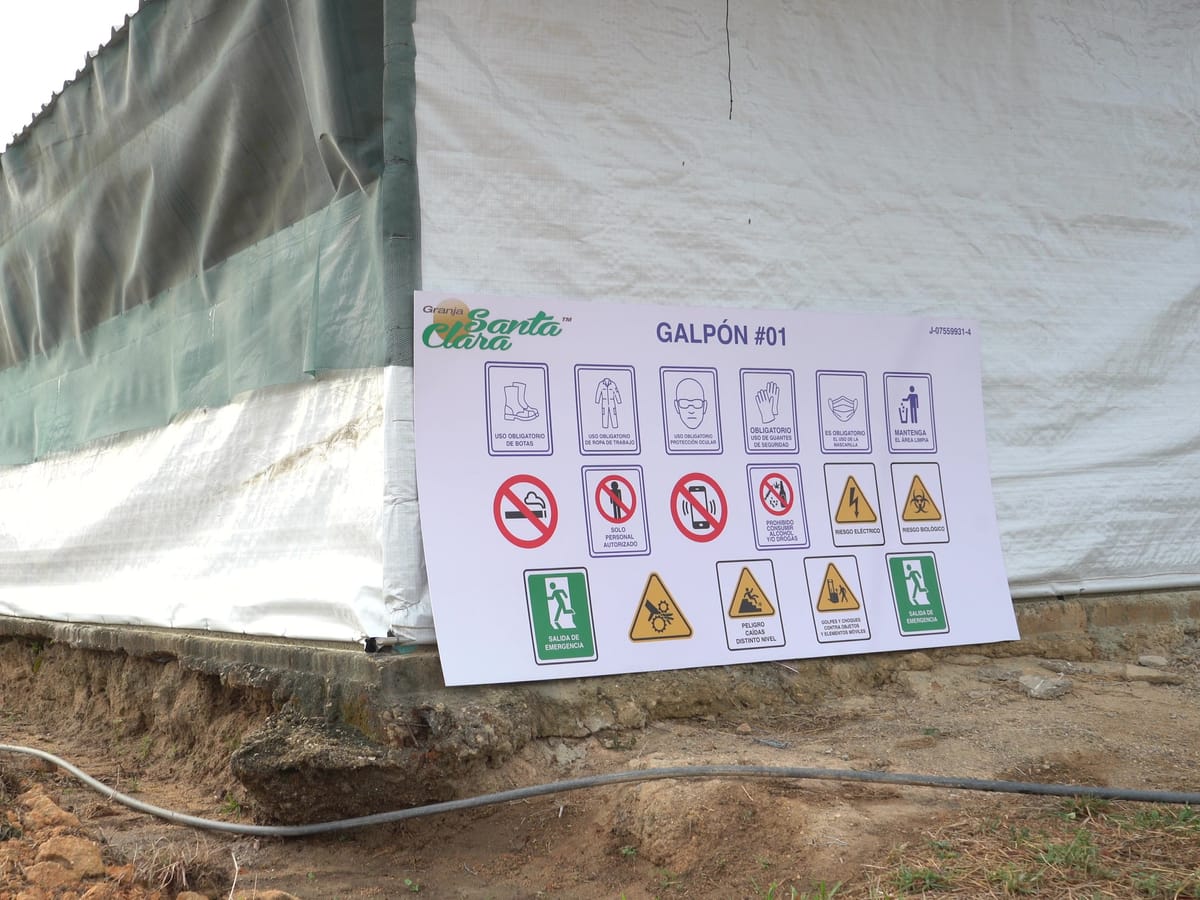
Biosecurity
Every house has its protocol posted at the door: mandatory kit, restricted access and entry control. On a genetics farm, flock health is not recovered, it is protected.
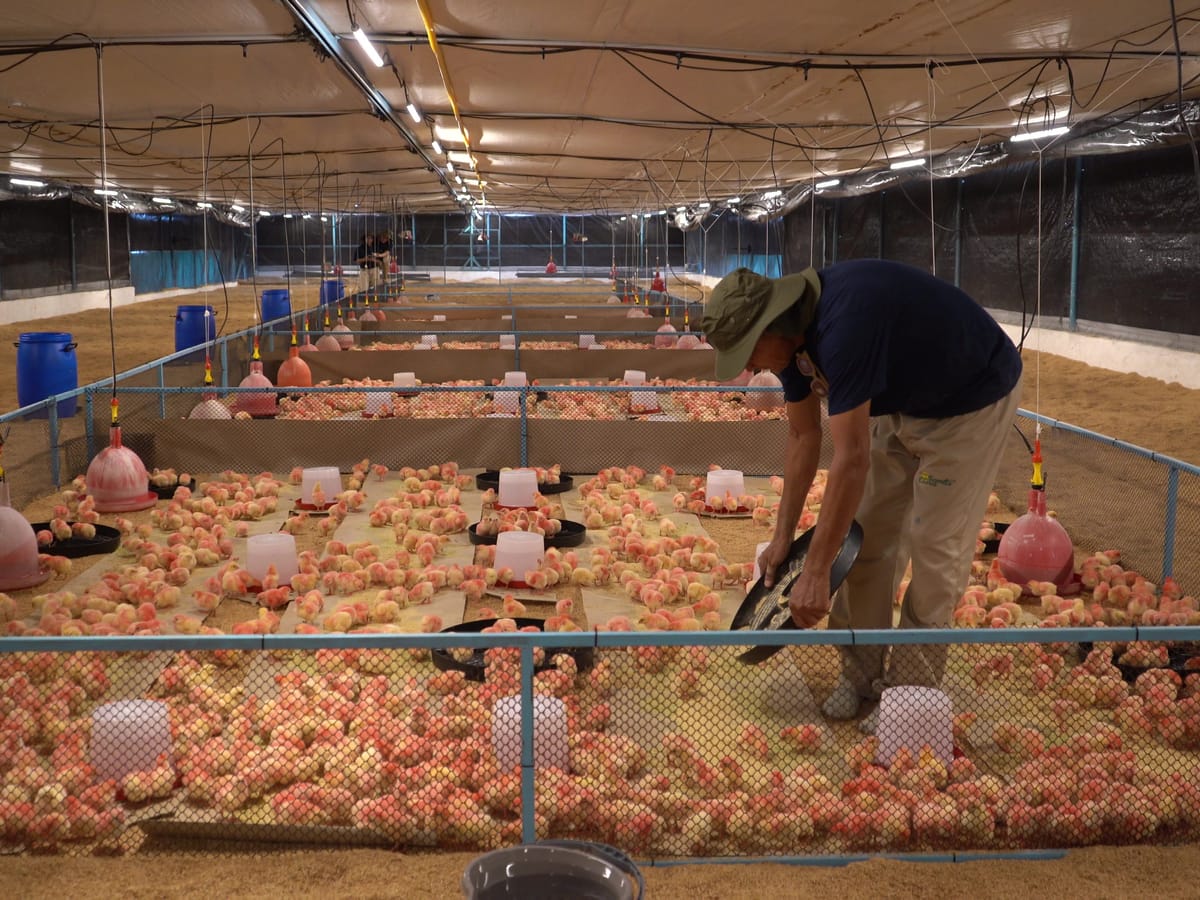
Daily management
Staff in the house every day: feed distribution, drinker checks, bedding control and flock weighing. The group’s technical team supports the full cycle.
Within the group
Granja Santa Clara Venezuela produces the day-old chick, and the Mersan farm stores distribute and sell it. It is the same group covering both ends: the genetics in Cojedes and 79 points of sale across 16 states through which the chick reaches the farm.
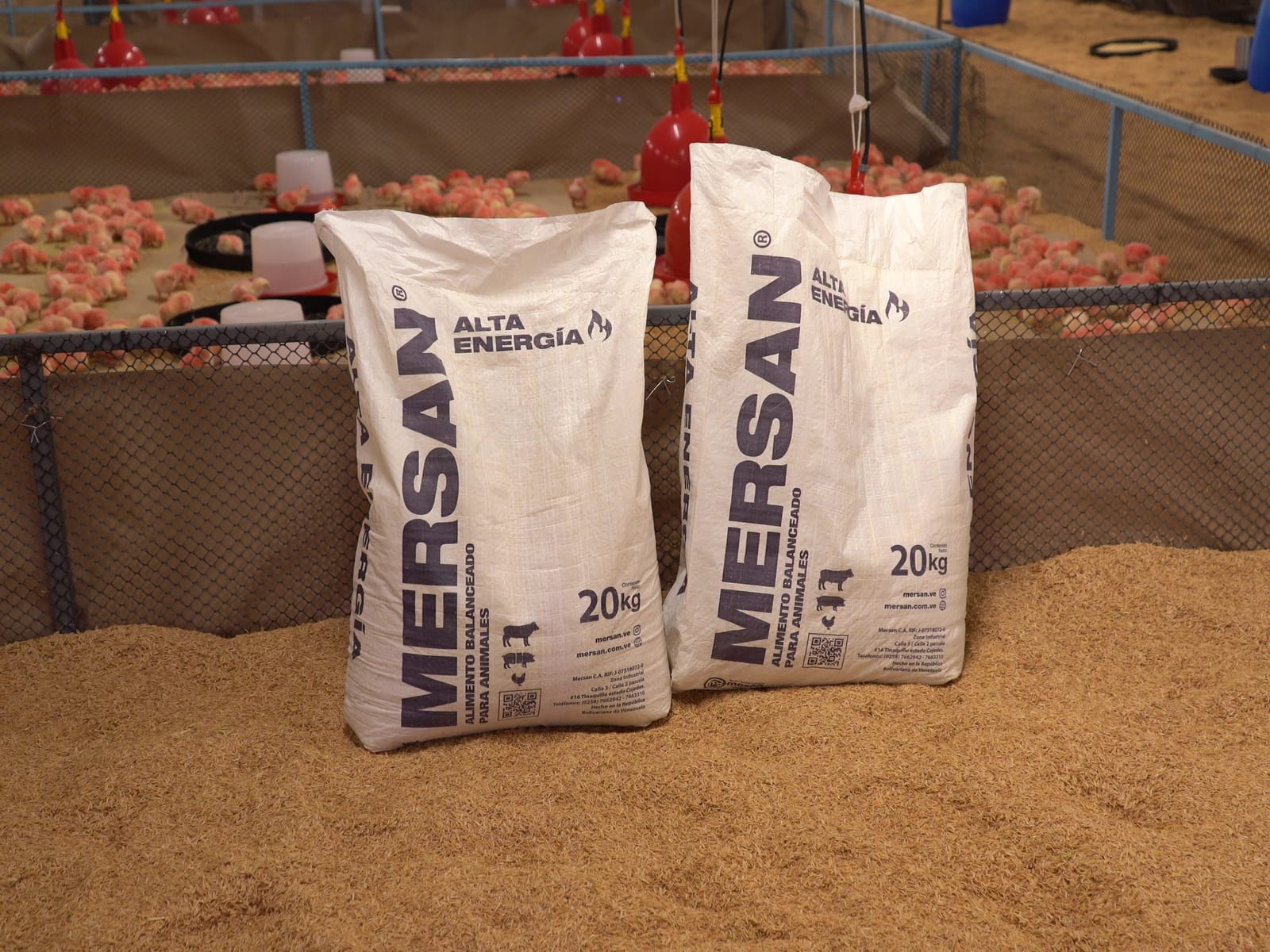
The farm produces
Ross 308 day-old chicks, healthy, vaccinated and traceable, with the uniform quality and steady volume an in-house farm provides.
The farm stores sell
79 points of sale across company-owned stores, franchises and commercial partners, in 16 states. The distribution channel does not have to be built: it is already running.
And the rest of the cycle follows
At the same counter where producers buy the chick they find the feed for each stage, the veterinary medicine, the equipment and the vet who tells them how to use it.
Grupo Merino does not compete with the producer: it has no slaughterhouse and does not raise chickens to sell meat. Its business is supplying those who produce.
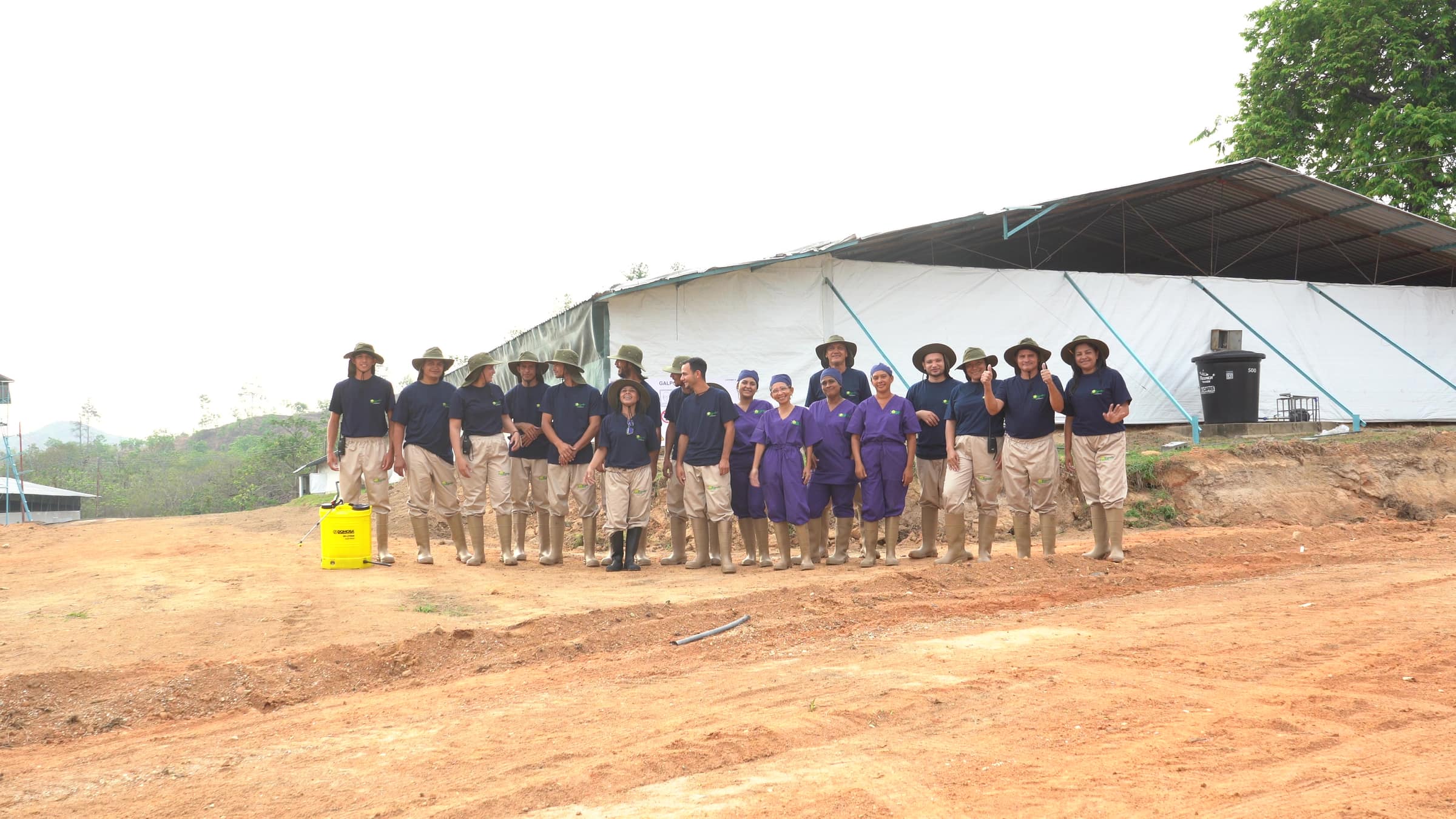
The team
Qualified veterinarians, engineers and animal scientists, in the houses every day of the cycle. A breeder farm rests on daily management, and rearing is its most delicate stage.
Horizon
The plan is not to do more of the same. It is to turn the farm into a diversified genetics and animal production platform, integrated into the Mersan ecosystem and aimed at small and medium producers: the ones who today have to source every link on their own.
April 2027
The first two rearing houses
The works that get the rearing operation going: the first two controlled-environment houses, for 10,000 laying hens each, finished in April 2027. It is the physical capacity needed before the bird can be reared and handed over ready to the producer, and the starting point of the pullet line, which will add further houses.
- Rearing houses
- 2
- Laying hens per house
- 10,000
- Birds housed in total
- 20,000
2027
In-house hatchery
An industrial hatchery to process the farm’s own fertile eggs. With it the genetics cycle closes completely: from egg to chick, with no intermediaries and no dependence on third-party capacity.
- From fertile egg to day-old chick
- Closed cycle
2027
ISA Brown pullet rearing
Production and rearing of laying pullets, sold at 16 weeks of age, close to coming into lay. The producer gets a bird ready to lay, not a chick still to be reared.
- Pullets a month, average availability
- 11,000 to 12,000
- Pullets a year, capacity
- 140,000
- Age at sale
- 16 weeks
2027
Rabbit genetics
An in-house genetic nucleus supplying rabbit breeding stock to small and medium producers, with the nucleus replacing itself: the line does not depend on outside replacement.
- Breeding females and males a month
- 300 + 30
- Breeding animals a year, capacity
- 3,960
2027 to 2028
Swine genetics
A swine genetics farm starting with 100 sows in 2027 and scaling through 2028. At full capacity it supplies both F1 females for breeding operations and males for fattening. The specific genetics is yet to be defined.
- Sows, from 2027 to the end of 2028
- 100 to 1,000
- Piglets a year at full capacity
- 22,000 to 24,000
- F1 females a year for breeding
- 10,000 to 12,000
2028
Laying quail
Production of laying quail by hatching imported fertile eggs locally. The bird is sold already reared, close to the start of lay.
- Reared females a month, target capacity
- 5,000
- Laying quail a year
- 60,000
Operations
Houses built, equipment installed and the flock housed. Three shots of what the capital has already built in Cojedes.
Contact
We work with producers and customers, with suppliers and commercial partners, and with those looking to invest in agribusiness. Tell us what you need and we will put you in touch with the right business unit.
About the group